What we do on site, and why it matters to you
| What happens |
What it means for you |
| The room is closed off with plastic sheeting and the air inside is pulled through a filter so pressure stays negative |
What we disturb stays in the work area rather than drifting into the bedrooms |
| Drywall, insulation, carpet pad, and trim that got wet and grew mold come out; studs, plates, and slab are cleaned where they stand |
Porous material that can’t be saved leaves; the structure stays |
| Everything removed is bagged before it crosses the containment line |
No open bags of moldy drywall going down your hallway |
| Framing and surfaces are HEPA-vacuumed and wiped, then dried until they read dry |
The wall doesn’t close back up over the same problem you called about |
| We track down where the water came from and tell you what has to change before anything is rebuilt |
The moisture has to stop or the removal is temporary, and we say so plainly |
| You get a written report listing what came out, from where, and why |
Louisiana requires it, and it’s what a buyer, a tenant, or an adjuster will ask to see |
That Musty Smell
One room smells different from the rest of the house. It’s worse after rain, or in July, or when the air conditioner has been running all afternoon. You’ve pulled the closet apart and found nothing. That smell is a recognized sign of hidden growth, and in Livingston Parish it is often the first thing a homeowner notices in a room that was rebuilt after the flood.
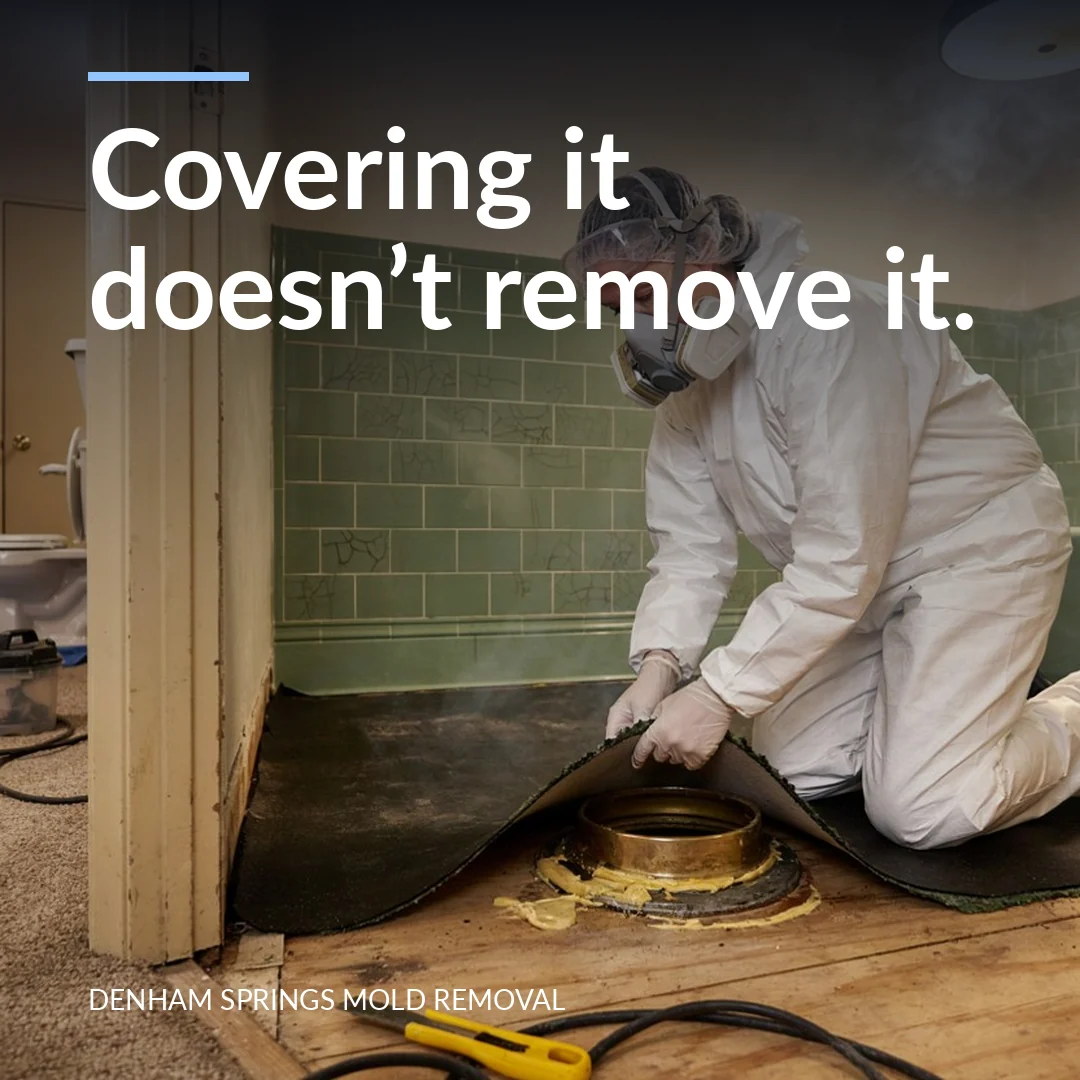
Painting over it doesn’t help. EPA says plainly not to paint or caulk over mold; the paint fails, and the growth underneath keeps feeding on the paper face of the drywall. Scrubbing helps for a few weeks. If the same stain keeps returning in the same spot, something behind that wall is still wet, and covering it doesn’t remove it.
Mold You Can’t See Yet
Livingston Parish housing is mostly slab-on-grade, and a lot of it is newer than people assume — subdivisions off Juban Road, Range Avenue, and Highway 16 filled in through the 2000s and 2010s. Newer houses are built tight. That’s good for the power bill and bad for a wet wall, because a supply line seeping inside a cabinet or a window that leaks in a north wind has no way to dry. Out toward Springfield, Killian, and Maurepas, the raised houses and camps have the opposite problem: damp air under the floor for most of the year.
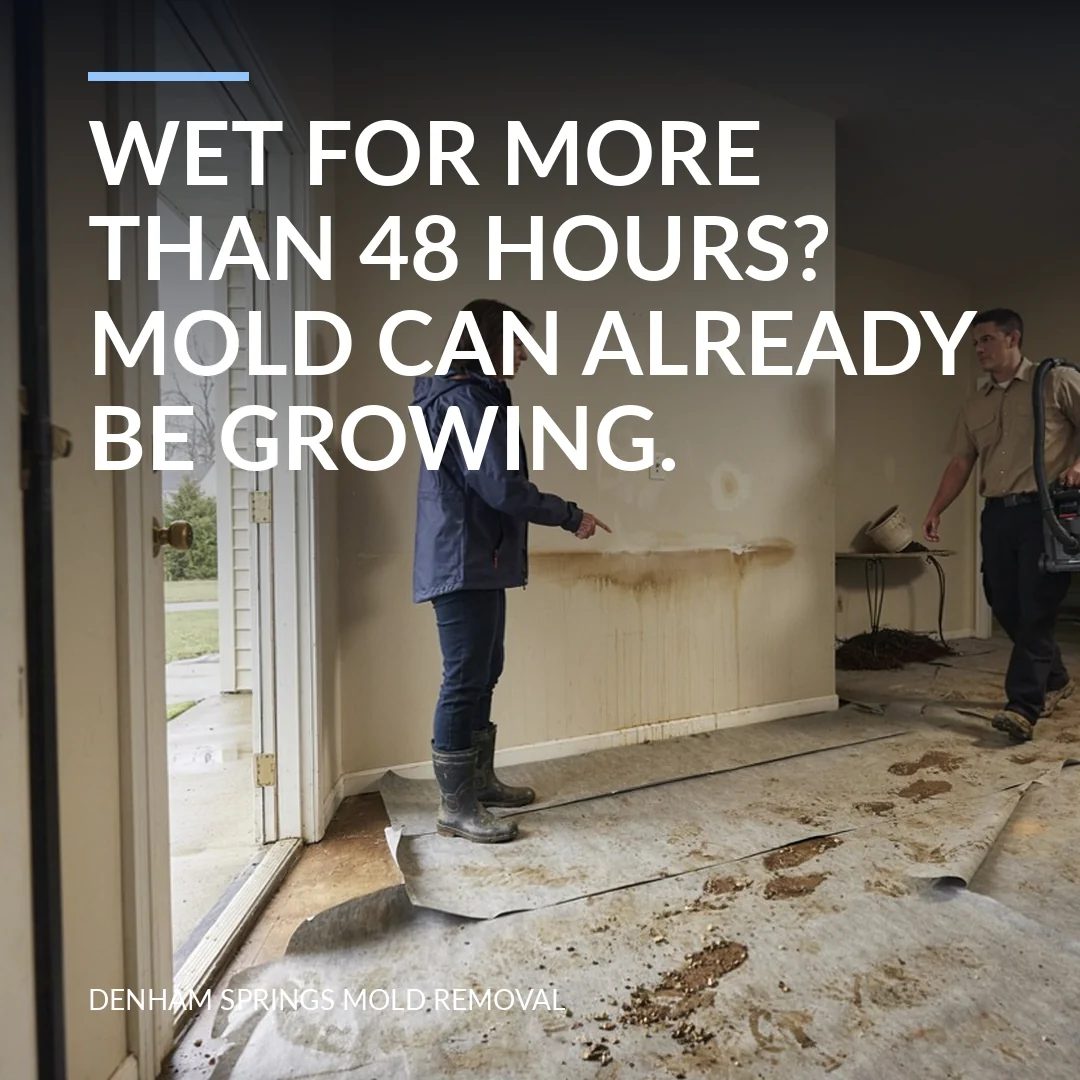
EPA says to dry wet materials within 24 to 48 hours. CDC says anything wet longer than that will generally support extensive growth. By the time you move the couch and find the stain, that window has usually closed.
Worried About The Kids?
According to CDC, a damp or moldy home may bring on a stuffy nose, sore throat, cough, wheeze, burning eyes, or a rash in some people — and nothing at all in others. Children, pregnant women, older adults, and anyone with asthma or allergies are the groups Louisiana’s Department of Health lists as more sensitive. We can’t tell you whether a cough is the house. We can get the mold out, and EPA, CDC, and FEMA all say the same thing about the cleanup itself: children should stay away from it. If someone in the house is already reacting, say so when you call. It changes how we sequence the work.
Renting In Livingston Parish?
Louisiana law makes a landlord responsible for defects in the property whether or not the landlord knew about them, and a tenant can’t hold back rent to force a repair. For both sides, the quickest way out is removal with a written record of what came out and why. Landlords: that report is your file. Tenants: tell us when you call that you’re renting, and we’ll document the job with that in mind.
Selling The House?
Every seller in Louisiana fills out the Real Estate Commission’s property disclosure form, and it asks by name about mold, water intrusion, and flooding. In Livingston Parish, buyers already assume a 2016 history and ask about it. A problem that was removed and documented is one line on the form and one report in the folder. A problem that was painted over and turns up during the buyer’s walk-through is a very different conversation. Addressing a known problem now is easier than explaining it in the middle of a sale.
Not Sure It’s Serious?
Call anyway. Tell us where you see it or smell it, what got wet, and when — whether that was last Tuesday or August 2016. When we’re available you’re connected on the spot; when we’re out on a job we book a callback window and tell you the number to expect.
We take calls from Denham Springs, Walker, Watson, Livingston, Springfield, Albany, Satsuma, Port Vincent, French Settlement, and the rest of Livingston Parish. The full list of communities is on the areas page.
Start with a conversation.